ou drop off a suit, dress, coat, or favorite garment at the dry cleaner, and a few days later, it comes back clean, fresh, pressed, and ready to wear. But have you ever wondered what actually happens to your clothes in between?
And if it’s called dry cleaning, how does it clean your clothes without water?
The answer may surprise you: dry cleaning isn’t completely dry.
Instead of using water as the primary cleaning medium, professional dry cleaning uses specialized liquid solvents and equipment designed to clean garments that may not respond well to traditional washing.
So, how does dry cleaning work, and what exactly happens inside a dry cleaning machine?
Let’s take a closer look at the professional dry cleaning process.
What Is Dry Cleaning?
Dry cleaning is a professional garment-cleaning process that uses a specialized cleaning solvent rather than relying primarily on water and regular laundry detergent.
Despite the name, your clothes do come into contact with liquid. The difference is the type of liquid used.
Traditional washing machines clean clothes primarily with water and detergent. A professional dry cleaning machine instead uses a cleaning solvent that can help remove oils, grease, and certain stains while reducing some of the risks associated with washing particular garments in water.
This makes dry cleaning useful for many garments with delicate fabrics, special construction, linings, or finishes.
However, the care label always matters. Not every garment needs to be dry cleaned, and professional cleaners should consider the fabric, construction, stains, and manufacturer’s care instructions before processing an item.
How Does a Dry Cleaning Machine Work?
At first glance, a commercial dry cleaning machine may look like a large industrial washing machine. What’s happening inside, however, is quite different.
A professional dry cleaning machine is designed to handle several parts of the cleaning process within a controlled system.
Garments are placed inside a rotating drum. A specialized cleaning solvent circulates through the garments, helping lift soils and contaminants from the fabric.
The solvent is then drained and filtered so impurities can be separated from it. Modern machines can recover and reuse much of the solvent within the system.
After cleaning, the machine extracts the remaining solvent from the garments and moves into a controlled drying process. Solvent vapors are recovered rather than simply released from the machine.
By the time the cycle is complete, the garments are dry and ready for the next stages of professional finishing.
But the machine is only one part of the process.
The Dry Cleaning Process: Step by Step
When you send a garment to a professional dry cleaner, it usually goes through several stages before it is returned to you.
1. Garment Inspection and Tagging
The process starts before your clothes ever enter the machine.
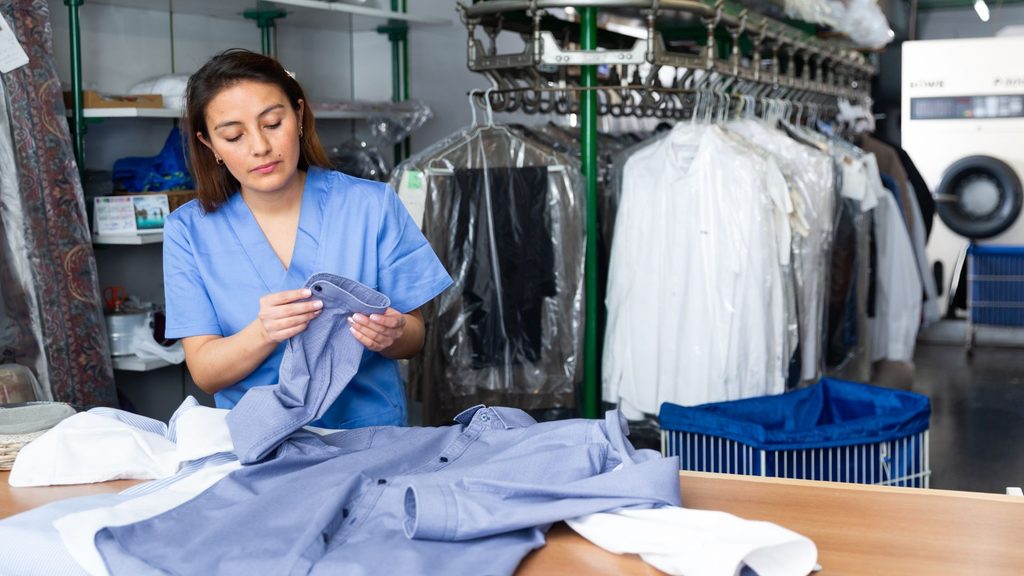
Each garment is identified and inspected. The cleaner may look for visible stains, fabric damage, loose buttons, embellishments, care labels, and other details that could affect how the item should be handled.
This initial inspection is important because different garments can require different treatments.
2. Stain Identification and Pre-Treatment
Have a coffee stain on your shirt? Oil on your jacket? Makeup on a collar?
Some stains need additional attention before the main cleaning cycle begins.
Professional cleaners may pre-treat specific areas depending on the type of stain and fabric. Different stains behave differently, which is why knowing what caused a stain can sometimes help your cleaner determine how to approach it.
If you know what caused a stain, it’s helpful to tell your dry cleaner when sending the garment in.
3. The Garments Enter the Dry Cleaning Machine
After inspection and pre-treatment, appropriate garments are placed inside the dry cleaning machine.
The machine’s drum rotates the garments while cleaning solvent circulates through them.
This movement allows the solvent to move through the fabric and help loosen oils, dirt, and other soils.
Unlike a home washing machine, water is not the primary cleaning liquid during this process.
4. The Solvent Is Filtered
One of the interesting things about professional dry cleaning equipment is that the cleaning solvent doesn’t necessarily disappear after a single cycle.
During the cleaning process, the solvent can pass through filtration and purification systems that help remove contaminants.
Modern closed-system machines are designed to recover much of the solvent so it can be reused.
This is one of the biggest differences between professional dry cleaning equipment and a standard household washer.
5. Solvent Extraction and Drying
Once the cleaning portion is finished, the machine extracts as much solvent as possible from the garments.
The garments then go through a controlled drying process.
Warm air circulates through the drum, while the machine captures and condenses solvent vapor for recovery within the system.
This process continues until the garments are dry.
6. Post-Cleaning Stain Inspection
A garment isn’t necessarily finished just because it has come out of the machine.
Professional cleaners can inspect the garment again to see whether stains remain.
Some spots may require additional treatment.
It’s also important to understand that dry cleaning cannot guarantee that every stain will disappear completely.
The result depends on factors such as the type of stain, how long it has been there, the fabric, the garment’s color, previous attempts to remove it, and whether aggressive treatment could damage the material.
Sometimes protecting the garment is more important than repeatedly treating a stubborn stain.
7. Pressing and Finishing
This is where garments start getting that polished, professionally cleaned appearance.
Depending on the item, finishing may involve professional pressing, steaming, shaping, or other techniques.
The goal isn’t simply to clean the garment. Professional finishing helps restore its presentation and prepare it to be worn again.
8. Final Inspection
Before the garment is returned, it can undergo a final quality check.
The cleaner looks at the overall appearance of the garment and makes sure it is properly finished and ready for the customer.
From there, the item can be packaged and prepared for pickup or delivery.
Why Doesn’t Dry Cleaning Use Regular Water?
Water works extremely well for everyday laundry, but it isn’t ideal for every garment.
Certain fabrics, dyes, trims, and garment structures can react differently when exposed to water, agitation, and traditional washing and drying.
A structured jacket, for example, isn’t just a piece of fabric. It may contain linings, interfacing, padding, and other components that help it maintain its shape.
That’s one reason the care label inside your clothing is so important.
If a label says “Dry Clean Only,” putting the garment into your regular washing machine could potentially affect its shape, texture, color, or construction.
Professional cleaning allows the cleaner to choose a process that is more appropriate for the garment.
What Kind of Solvent Does a Dry Cleaning Machine Use?
There isn’t just one cleaning solvent used throughout the entire dry cleaning industry.
Different professional cleaners and machines may use different solvent systems and cleaning technologies.
Historically, perchloroethylene—often called perc—became widely associated with dry cleaning. Today, the industry also uses alternative solvent systems, and equipment and environmental requirements continue to evolve.
The exact process therefore depends on the cleaner, the equipment being used, and the garment being treated.
For customers, the important takeaway is simple: dry cleaning replaces the water-centered process of regular laundry with a specialized solvent-based professional cleaning process.
What Clothes Should Be Dry Cleaned?
Whether something should be dry cleaned depends primarily on the garment’s care instructions, fabric, construction, and condition.
Items commonly sent for professional dry cleaning can include:
- Suits and suit separates
- Blazers and structured jackets
- Dresses
- Formalwear
- Coats
- Delicate garments
- Certain skirts and trousers
- Garments with special linings or construction
Don’t assume that an expensive garment automatically needs dry cleaning—or that every garment can safely go into a washing machine.
Check the care label first.
If you’re unsure, ask a professional cleaner before washing the garment yourself.
Can Dry Cleaning Remove Every Stain?
This is one of the most common misconceptions about professional cleaning.
Dry cleaning can be very effective for many stains, particularly oily or greasy soils, but no professional cleaning method can guarantee the complete removal of every stain.
A fresh stain may respond differently from one that has been sitting in a garment for months.
The stain’s chemical composition matters. So do the fabric, dye, previous cleaning attempts, and heat exposure.
One of the best things you can do is avoid experimenting with aggressive stain-removal methods on a valuable or delicate garment.
If possible, tell your cleaner:
- What caused the stain
- Approximately when it happened
- Whether you already tried to remove it
- What products you used on it
That information can help the cleaner decide how to approach the stain safely.
Is Dry Cleaning Better Than Regular Laundry?
Neither process is universally “better.” They’re designed for different situations.
Regular wash-and-fold laundry is ideal for many everyday washable items, such as T-shirts, socks, underwear, towels, and other garments whose care labels permit machine washing.
Dry cleaning is better suited to garments that require specialized professional care.
Think of it less as dry cleaning vs. laundry and more as choosing the right cleaning method for each item.
A good laundry and dry cleaning service should help make that distinction rather than treating every garment the same way.
How Long Does Dry Cleaning Take?
Dry cleaning isn’t always a same-day process.
Beyond the machine cycle itself, professional dry cleaning can involve inspection, stain treatment, cleaning, finishing, pressing, quality control, and preparation for return.
At Clean Avenue Laundry, our dry cleaning turnaround is generally 48–72 hours, allowing time for your garments to be properly processed and finished.
If you have an important event coming up, it’s always a good idea to schedule your dry cleaning ahead of time.
Professional Dry Cleaning in NYC Without the Extra Trip
For New Yorkers, finding time to visit the dry cleaner can sometimes be harder than deciding what needs to be cleaned.
Between work, commuting, errands, family, and everything else packed into a typical NYC week, carrying a pile of clothes to and from the cleaner isn’t exactly how most people want to spend their free time.
That’s where Clean Avenue Laundry can help.
We offer convenient laundry and dry cleaning pickup and delivery service in NYC, so you can take care of your clothes without adding another stop to your schedule.
Simply schedule your pickup, prepare your garments, and let our team handle the rest.
Frequently Asked Questions About Dry Cleaning
Does dry cleaning actually use liquid?
Yes. Despite the word “dry,” dry cleaning uses liquid cleaning solvents. It’s called dry cleaning because water is not the primary cleaning medium.
Does a dry cleaning machine wash and dry clothes in the same machine?
Many modern professional dry cleaning machines integrate cleaning, solvent extraction, drying, and solvent recovery within a closed system.
Is dry cleaning good for stains?
Dry cleaning can be effective for many stains, particularly certain oils and grease. However, stain removal depends on the type and age of the stain, fabric, dye, and previous treatments, so complete removal isn’t always possible.
Should I tell my dry cleaner what caused a stain?
Yes. If you know what caused the stain, let your cleaner know. That information can help determine an appropriate treatment.
Can I dry clean clothes that say “Dry Clean Only”?
A “Dry Clean Only” label generally indicates that professional dry cleaning is the recommended care method. Following the manufacturer’s care instructions can help reduce the risk of damaging the garment.
How often should clothes be dry cleaned?
There’s no single schedule that works for every garment. How often you need professional cleaning depends on the type of clothing, how frequently it’s worn, stains, odors, exposure to perspiration, and the manufacturer’s care instructions.
The Bottom Line: How Does Dry Cleaning Work?
So, how does dry cleaning work?
The process isn’t simply putting clothes into a special washing machine.
Professional dry cleaning combines garment inspection, stain treatment, solvent-based machine cleaning, solvent extraction and recovery, controlled drying, finishing, pressing, and final inspection.
Each stage plays a role in caring for garments that may need more specialized treatment than a normal wash-and-dry cycle.
And while the science happening inside a dry cleaning machine is interesting, the best part for you is much simpler:
You don’t have to do it yourself.
If your suits, dresses, coats, or other garments are ready for professional care, let Clean Avenue Laundry take laundry day off your schedule.
Ready to Send Out Your Dry Cleaning?
Schedule a convenient dry cleaning pickup and delivery in NYC with Clean Avenue Laundry.
We’ll pick it up, take care of the cleaning, and bring it back to you—so you can spend less time worrying about laundry and more time doing what matters.
Clean Avenue Laundry — professional garment care, picked up and delivered to your door.
🧺 Laundry made easy.
Skip the stress of laundry day — Clean Avenue Laundry picks up, cleans, folds, and delivers your clothes right to your door anywhere in NYC.